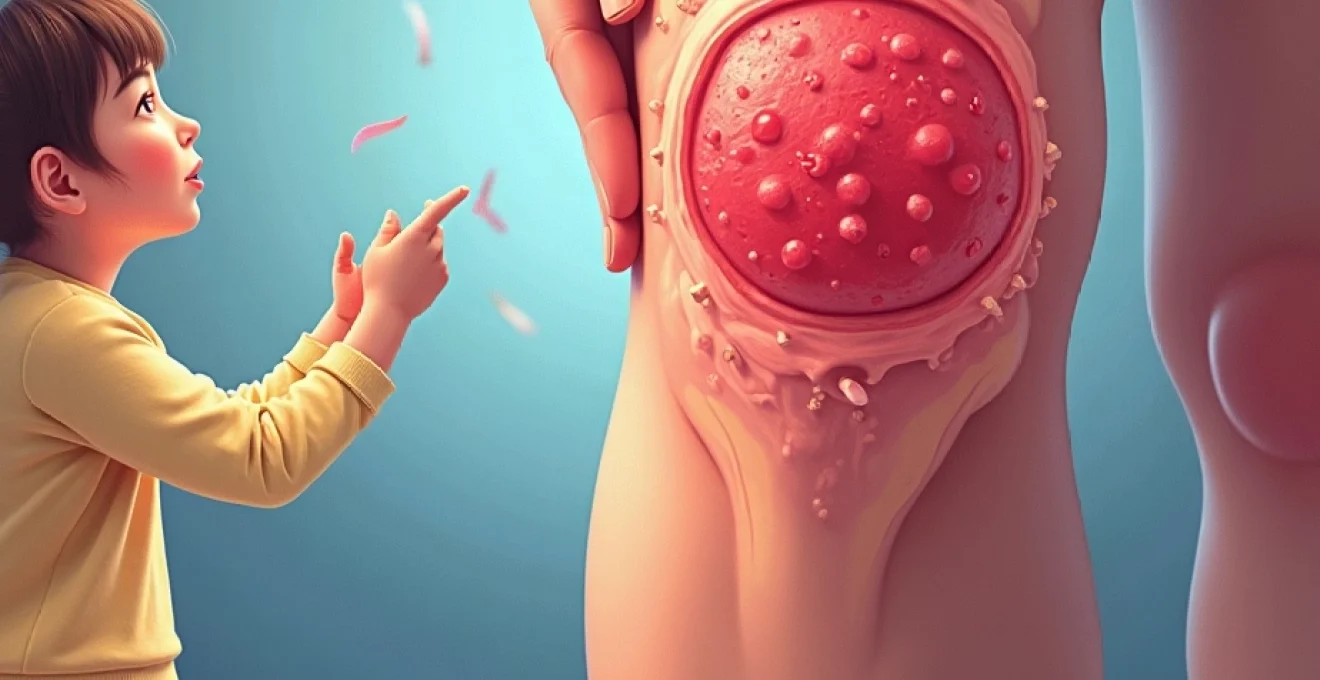
Herpes simplex virus infections extending to the knee region represent a fascinating yet often misunderstood manifestation of viral dermatology. While most people associate herpes outbreaks with oral or genital areas, the virus can indeed manifest on various body parts, including the knee and surrounding lower extremities. This phenomenon occurs through complex neurotropic pathways that the herpes simplex virus exploits to establish latency in nerve ganglia and subsequently reactivate in unexpected anatomical locations.
The knee region, being innervated by multiple dermatomes from the lumbar and sacral nerve roots, can serve as a site for herpes simplex virus reactivation when the virus has established latency in the corresponding dorsal root ganglia. Understanding this pathophysiology is crucial for healthcare professionals and patients alike, as misdiagnosis can lead to inappropriate treatment and unnecessary anxiety. The manifestation of herpes on the knee challenges conventional thinking about viral distribution patterns and highlights the importance of comprehensive neuroanatomical knowledge in clinical practice.
Herpes simplex virus pathophysiology and knee joint localisation
The herpes simplex virus demonstrates remarkable neurotropic characteristics that enable it to establish lifelong latency within sensory nerve ganglia. This viral behaviour forms the foundation for understanding how herpes can manifest in seemingly unusual locations such as the knee region. The virus initially enters the body through mucous membranes or compromised skin barriers, then travels retrograde along peripheral sensory nerves to reach the dorsal root ganglia, where it establishes latency.
The journey from initial infection to knee manifestation involves complex viral reactivation mechanisms that can occur months or even years after the primary infection. During periods of immunosuppression, stress, or other triggering factors, the dormant virus can reactivate and travel anterograde along the same neural pathways to reach the skin surface. This process explains why herpes outbreaks can appear in areas that seem disconnected from the original infection site, creating diagnostic challenges for clinicians.
HSV-1 and HSV-2 neurotropic migration patterns to lower extremities
Both herpes simplex virus type 1 (HSV-1) and type 2 (HSV-2) possess the capability to establish latency in ganglia that innervate the lower extremities, though their migration patterns differ significantly. HSV-1 traditionally associates with trigeminal ganglia for orofacial manifestations, but can also establish latency in lumbosacral ganglia through various transmission routes. When HSV-1 reaches the lower extremities, it typically does so through direct skin contact with infected secretions or through autoinoculation from oral lesions.
HSV-2 demonstrates a stronger affinity for the sacral nerve ganglia, making lower extremity manifestations more common with this viral subtype. The virus can establish latency in the S2, S3, and S4 ganglia, which provide sensory innervation to portions of the thigh, knee, and lower leg regions. This neuroanatomical relationship explains why genital HSV-2 infections can occasionally manifest as knee or thigh lesions during reactivation episodes.
Sacral nerve root ganglion reactivation mechanisms
The sacral nerve root ganglia serve as crucial reservoirs for herpes simplex virus latency, particularly for infections that may later manifest in the knee region. These ganglia, located at the S1-S5 levels, maintain the dormant viral DNA in a circular episomal form within the neuronal nuclei. During latency, viral gene expression remains minimal, with only latency-associated transcripts being produced, allowing the virus to evade immune detection while maintaining the potential for reactivation.
Reactivation from sacral ganglia involves complex molecular cascades triggered by various stimuli including physical trauma, emotional stress, immunosuppression, or hormonal fluctuations. The reactivation process begins with increased viral gene expression , leading to virion assembly and transport along sensory nerve axons to the skin surface. This mechanism explains how patients with established genital herpes infections may occasionally experience outbreaks in anatomically distant locations such as the knee, following the distribution of sensory nerves originating from the affected ganglia.
Dermatome L3-S2 distribution and knee region involvement
Understanding dermatome distribution patterns is essential for recognising how herpes simplex virus can manifest in the knee region. The knee area receives sensory innervation from multiple dermatomes, primarily L3, L4, and L5 from the lumbar region, with additional contributions from S1 and S2 sacral segments. This complex innervation pattern creates multiple potential pathways for herpes virus reactivation to reach the knee surface.
The L3 dermatome covers the anterior and medial aspects of the thigh, extending to the medial knee region, while L4 encompasses the anterior thigh and extends to the medial leg and foot. L5 primarily affects the lateral thigh and leg, with some contribution to the lateral knee area. The S1 and S2 dermatomes influence the posterior and lateral aspects of the thigh and leg, occasionally extending to the posterior knee region. This anatomical complexity means that herpes lesions appearing on the knee could originate from viral latency in any of these corresponding dorsal root ganglia.
Varicella-zoster virus differential diagnosis considerations
Distinguishing between herpes simplex virus and varicella-zoster virus (VZV) manifestations in the knee region presents significant diagnostic challenges, as both viruses belong to the herpesvirus family and share similar vesicular presentation patterns. VZV, responsible for chickenpox and shingles, demonstrates a marked predilection for dermatomal distribution, often presenting as a unilateral, band-like eruption that follows specific nerve pathways. This characteristic dermatomal pattern serves as a key distinguishing feature from HSV infections, which tend to be more localised and may not strictly follow dermatome boundaries.
The clinical presentation of VZV typically includes more pronounced prodromal symptoms, including severe neuralgic pain that may precede the vesicular eruption by several days. The vesicles in VZV infections often appear in crops along the affected dermatome, with a characteristic “dew drop on a rose petal” appearance. In contrast, HSV lesions tend to cluster more tightly and may appear more uniform in their development stage. The pain associated with VZV tends to be more severe and prolonged, potentially leading to post-herpetic neuralgia, while HSV-related discomfort is generally more localised and self-limiting.
Clinical presentation and diagnostic criteria for knee herpes manifestations
The clinical presentation of herpes simplex virus infections in the knee region exhibits characteristic features that, while following the general pattern of HSV manifestations, may present unique challenges due to the anatomical location and mechanical stress placed on the knee joint during daily activities. The initial presentation typically begins with prodromal symptoms, followed by the characteristic vesicular eruption that progresses through predictable stages of development, maturation, and healing.
Patients often report an initial tingling or burning sensation in the affected area, which may be dismissed as minor trauma or irritation related to physical activity. This prodromal phase can last from several hours to 2-3 days before visible lesions appear. The diagnostic challenge lies in recognising these early symptoms as potential viral manifestations rather than mechanical or inflammatory conditions affecting the knee joint. Healthcare providers must maintain a high index of suspicion, particularly in patients with a history of herpes simplex infections or those presenting with recurrent, unexplained knee area discomfort.
Vesicular eruption patterns on patellar and peripatellar regions
The vesicular eruptions characteristic of herpes simplex infections in the knee region typically manifest as clusters of small, fluid-filled vesicles that appear on an erythematous base. These lesions commonly occur on the patellar surface, peripatellar areas, or extending onto the surrounding thigh or leg regions, depending on the specific dermatome involvement. The vesicles usually measure 2-4 millimetres in diameter and contain clear to slightly cloudy fluid during the initial stages of development.
The distribution pattern of these vesicles provides important diagnostic clues, as they tend to follow the sensory nerve distribution rather than conforming to anatomical landmarks or joint boundaries. The clustering pattern distinguishes HSV lesions from other vesicular conditions that might affect the knee region, such as contact dermatitis or bacterial infections. As the lesions progress, the vesicles may become pustular, eventually rupturing to form shallow, painful ulcerations with irregular borders. The healing process typically involves crust formation and gradual re-epithelialisation over 7-10 days in immunocompetent individuals.
Prodromal symptoms: paraesthesia and allodynia in affected dermatomes
The prodromal phase of herpes simplex virus reactivation in the knee region often presents with distinctive neurological symptoms that reflect the underlying viral reactivation within sensory ganglia. Patients frequently report paraesthesia, described as abnormal sensations including tingling, numbness, or “pins and needles” sensations in the affected dermatome. These symptoms may be accompanied by allodynia, where normally non-painful stimuli such as light touch or clothing contact become painful or uncomfortable.
The intensity and duration of prodromal symptoms can vary significantly between individuals and may be influenced by factors such as immune status, stress levels, and previous outbreak frequency. Some patients develop a heightened awareness of these early warning signs, enabling them to initiate early antiviral therapy before visible lesions appear. Recognition of prodromal symptoms represents a critical opportunity for therapeutic intervention , as antiviral medications demonstrate maximum efficacy when initiated within the first 24-48 hours of symptom onset. Healthcare providers should educate patients about these early warning signs to facilitate prompt treatment initiation and potentially reduce outbreak severity and duration.
Tzanck smear and PCR testing protocols for definitive diagnosis
Laboratory confirmation of herpes simplex virus infection in the knee region requires appropriate specimen collection and testing methodologies to ensure accurate diagnosis. The Tzanck smear, while less commonly used in modern practice, can provide rapid preliminary information about viral cytopathic effects. This technique involves scraping the base of fresh vesicles or ulcers to obtain cellular material, which is then stained and examined microscopically for characteristic multinucleated giant cells and intranuclear inclusion bodies.
Polymerase chain reaction (PCR) testing has emerged as the gold standard for HSV diagnosis due to its superior sensitivity and specificity compared to traditional methods. PCR can detect viral DNA even in the absence of viable virus , making it particularly valuable for testing dried or crusted lesions where viral culture might yield negative results. The procedure requires careful specimen collection from the vesicle base or ulcer margin using a synthetic swab, which should be placed immediately in appropriate transport medium to preserve viral nucleic acids. Results typically become available within 24-48 hours, providing rapid confirmation to guide treatment decisions.
Immunofluorescence assay techniques for HSV antigen detection
Direct fluorescent antibody (DFA) testing represents another valuable diagnostic approach for detecting herpes simplex virus antigens in clinical specimens from knee region lesions. This technique utilises monoclonal antibodies labelled with fluorescent dyes that specifically bind to HSV-1 and HSV-2 antigens present in infected cells. The procedure requires fresh specimen collection and immediate processing, as antigen degradation can occur rapidly in suboptimal storage conditions.
The DFA technique offers several advantages, including rapid turnaround time (typically 2-4 hours), type-specific identification of HSV-1 versus HSV-2, and good sensitivity for fresh vesicular lesions. However, the method requires experienced laboratory personnel for accurate interpretation and may show reduced sensitivity compared to PCR, particularly for specimens collected from crusted or healing lesions. The visual nature of immunofluorescence results allows for immediate quality assessment and can provide valuable information about the extent of viral involvement in the sampled tissue. This technique proves particularly useful in clinical settings where rapid diagnosis is essential for initiating appropriate antiviral therapy and implementing infection control measures.
Antiviral treatment protocols and pharmacological management
The pharmacological management of herpes simplex virus infections affecting the knee region follows established antiviral protocols, with treatment strategies adapted to address the unique challenges presented by this anatomical location. The primary therapeutic goals include reducing viral replication, minimising symptom duration and severity, accelerating lesion healing, and preventing secondary bacterial infections that may complicate the clinical course. Early intervention within the first 72 hours of symptom onset provides optimal therapeutic benefits, though treatment can still offer symptomatic relief when initiated later in the disease course.
Standard first-line antiviral agents include acyclovir, valacyclovir, and famciclovir, each offering distinct pharmacokinetic profiles and dosing conveniences. Acyclovir, the prototype nucleoside analogue, requires frequent dosing (five times daily) but remains cost-effective and well-tolerated. Valacyclovir, the L-valine ester prodrug of acyclovir, offers improved bioavailability and less frequent dosing requirements (twice or three times daily), enhancing patient compliance. Famciclovir provides similar benefits with excellent oral bioavailability and convenient twice-daily dosing for most indications.
For initial episodes of HSV infection in the knee region, recommended treatment regimens include acyclovir 400mg orally three times daily, valacyclovir 1g orally twice daily, or famciclovir 250mg orally three times daily, all administered for 7-10 days. Recurrent episodes typically require shorter treatment courses of 3-5 days, with the same medications at slightly modified dosages. Patient education about early symptom recognition enables prompt self-initiation of therapy , maximising therapeutic benefits. Some patients may benefit from suppressive therapy if they experience frequent recurrences, using daily low-dose antiviral medications to reduce outbreak frequency and severity.
The location of herpes lesions on the knee presents unique treatment challenges due to constant mechanical stress from joint movement and potential exposure to environmental contaminants during daily activities.
Topical antiviral formulations may provide additional symptomatic relief, particularly for localised knee lesions, though their therapeutic benefit remains modest compared to systemic therapy. Acyclovir 5% cream or penciclovir 1% cream can be applied to affected areas every 2-4 hours during waking hours, beginning at the first sign of outbreak symptoms. The mechanical stress placed on knee skin during movement may reduce the residence time of topical medications , potentially limiting their therapeutic efficacy compared to applications on more static body regions.
Pain management represents a crucial component of comprehensive care for knee herpes infections, as the anatomical location may result in significant discomfort during routine activities such as walking, climbing stairs, or kneeling. Over-the-counter analgesics including acetaminophen or ibuprofen can provide effective symptomatic relief, while topical anaesthetics such as lidocaine gel may offer localised pain reduction. Cold compresses applied to the affected area for 10-15 minutes several times daily can help reduce inflammation and provide temporary pain relief, though direct ice contact should be avoided to prevent tissue damage.
Complications and secondary bacterial infections in knee herpes cases
The knee region’s susceptibility to mechanical trauma and environmental exposure creates unique risks for complications in herpes simplex virus infections affecting this anatomical area. The constant flexion and extension movements of the knee joint place mechanical stress on healing viral lesions, potentially delaying epithelialisation and increasing the risk of secondary bacterial superinfection. This mechanical disruption can lead to prolonged healing times and increased patient discomfort compared to HSV infections in less mobile body regions.
Secondary bacterial infections represent the most common complication of knee herpes lesions, with Staphylococcus aureus and Streptococcus pyogenes being the most frequently isolated pathogens . These opportunistic bacteria can colonise the disrupted skin barrier created by viral vesicles and ulcerations, leading to cellulitis, impetigo, or deeper soft tissue infections. The warm, moist environment created by clothing and perspiration in the knee region may facilitate bacterial proliferation, particularly during physical activity or in patients with poor hygiene practices.
Clinical signs of secondary bacterial infection include increasing erythema extending beyond the original lesion borders, purulent discharge, regional lymphadenopathy, and systemic symptoms such as fever or chills. The development of honey-crusted lesions suggests streptococcal impetigo, while the presence of thick, purulent drainage may indicate staphylococcal involvement. Prompt recognition and treatment of bacterial superinfection is essential to prevent progression
to deep tissue involvement or even osteomyelitis in severe cases. The proximity to the knee joint creates additional concerns about potential joint involvement, though this remains a rare complication in immunocompetent individuals.
Immunocompromised patients face significantly elevated risks of complications from knee herpes infections. These individuals may experience more extensive lesions, prolonged viral shedding, and increased susceptibility to atypical presentations that complicate diagnosis and treatment. The reduced immune response in these patients may allow viral replication to continue unchecked, leading to deeper tissue involvement and potential dissemination to other anatomical sites. Healthcare providers must maintain heightened vigilance for signs of complicated infections in patients with HIV, organ transplant recipients, or those receiving immunosuppressive medications.
Chronic pain syndromes may develop following knee herpes infections, particularly in patients who experience severe acute symptoms or complications during the initial outbreak. Post-herpetic neuralgia, while more commonly associated with varicella-zoster virus infections, can occasionally occur following HSV infections affecting sensory nerve distributions. This condition manifests as persistent burning, stabbing, or electric shock-like pain in the affected dermatome, potentially lasting months or years after the initial lesions have healed. The functional impact on knee mobility and daily activities can be substantial, requiring multidisciplinary pain management approaches.
Keloid scar formation represents another potential complication, particularly in patients with genetic predispositions or those who experience secondary bacterial infections. The mechanical stress placed on healing knee lesions during normal joint movement may contribute to abnormal collagen deposition and hypertrophic scarring. Early intervention with appropriate wound care and infection prevention measures can help minimise the risk of permanent cosmetic or functional sequelae. Patients should be counseled about proper wound care techniques and the importance of avoiding manipulation or picking of healing lesions to prevent scarring complications.
Prevention strategies and recurrence management protocols
Effective prevention of herpes simplex virus transmission to the knee region requires a comprehensive understanding of viral transmission pathways and implementation of targeted risk reduction strategies. Primary prevention focuses on avoiding initial HSV acquisition through safe sexual practices, including consistent condom use, open communication with sexual partners about HSV status, and regular STI screening. For individuals already infected with HSV, secondary prevention strategies aim to reduce the frequency and severity of recurrent outbreaks while minimising transmission risk to uninfected partners.
Lifestyle modifications play a crucial role in outbreak prevention, as various triggers can precipitate viral reactivation from latent ganglia. Stress management techniques, including regular exercise, adequate sleep, and stress-reduction practices such as meditation or yoga, can help maintain immune system function and reduce outbreak frequency. Nutritional optimization through a balanced diet rich in lysine and limited in arginine may provide additional benefits, though scientific evidence for dietary interventions remains limited. Avoiding known personal triggers, such as excessive sun exposure, physical trauma, or specific medications, can help individuals develop personalised prevention strategies.
For patients experiencing frequent recurrent outbreaks in the knee region, suppressive antiviral therapy represents an evidence-based intervention that can significantly reduce outbreak frequency and transmission risk. Daily suppressive regimens typically involve lower doses of standard antiviral medications: acyclovir 400mg twice daily, valacyclovir 500-1000mg daily, or famciclovir 250mg twice daily. These regimens can reduce outbreak frequency by 70-80% and decrease viral shedding by more than 90%, substantially reducing transmission risk to sexual partners.
Topical prevention strategies may offer additional benefits for individuals prone to knee region outbreaks. The application of high-SPF sunscreen to exposed areas during outdoor activities can prevent ultraviolet-triggered reactivation, while protective clothing or padding may reduce trauma-induced outbreaks in athletes or individuals with occupational knee exposure risks. Maintaining optimal skin hydration and barrier function through appropriate moisturising can help prevent skin breakdown that might facilitate viral reactivation or secondary bacterial infections.
Patient education represents a cornerstone of effective recurrence management, empowering individuals to recognise early warning signs and implement appropriate self-care measures. Healthcare providers should provide comprehensive information about prodromal symptoms, proper wound care techniques, and circumstances requiring medical evaluation. The development of personalised action plans that outline early treatment initiation, activity modifications, and transmission prevention measures can help patients manage outbreaks more effectively and reduce their impact on daily life.
Contact tracing and partner notification protocols become particularly important when knee herpes cases are identified, as the unusual anatomical location may indicate specific transmission circumstances or risk behaviours that require investigation. Healthcare providers should maintain appropriate confidentiality while ensuring that potentially exposed individuals receive appropriate screening and counseling. The development of clear protocols for handling unusual presentation sites can help healthcare facilities provide consistent, evidence-based care while maintaining patient privacy and dignity.
Long-term monitoring protocols for patients with recurrent knee herpes should include regular assessment of outbreak frequency, severity, and functional impact on daily activities. The tracking of trigger factors, treatment responses, and quality of life measures can help optimise individualised management strategies over time. Referral to specialist care may be appropriate for patients with frequent recurrences, atypical presentations, or significant functional impairment that does not respond adequately to standard therapeutic approaches.
Remember that while herpes on the knee may seem unusual, it follows the same viral pathophysiology as other HSV infections and responds well to appropriate antiviral therapy and supportive care measures.
The integration of telemedicine and digital health tools offers promising opportunities for improving recurrence management protocols. Mobile applications that track outbreak patterns, medication adherence, and trigger factors can provide valuable data for optimising treatment regimens. Remote monitoring capabilities allow healthcare providers to maintain continuity of care between office visits, potentially identifying concerning trends or treatment failures before they result in significant complications. These technological advances may be particularly beneficial for patients with knee herpes, who may experience mobility limitations during acute outbreaks that make traditional office visits challenging.