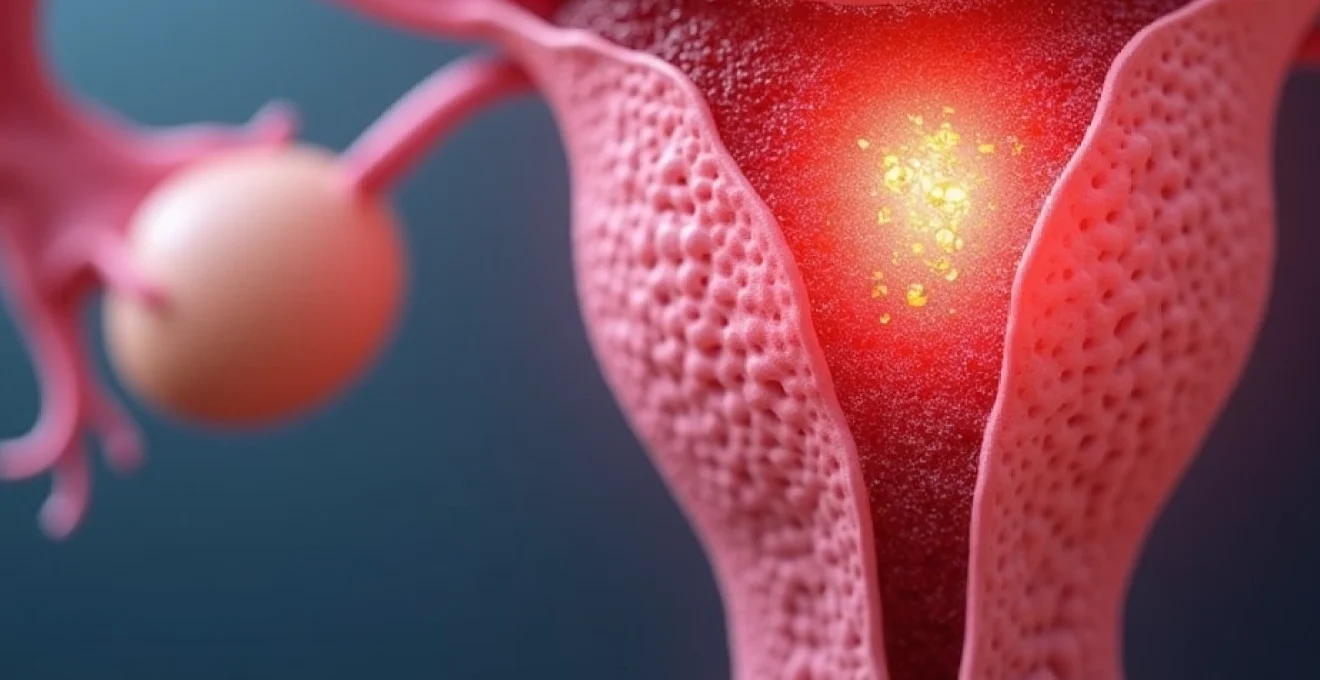
Septated ovarian cysts represent one of the most common yet concerning findings in women’s reproductive health. These complex cystic structures, characterised by internal dividing walls or septations, often trigger anxiety when discovered during routine pelvic examinations or imaging studies. While the vast majority of septated ovarian cysts prove benign, understanding their significance, diagnostic implications, and management approaches remains crucial for both patients and healthcare providers.
The presence of septations within an ovarian cyst transforms what might be a simple, reassuring finding into a more complex diagnostic challenge. These internal partitions can indicate various underlying pathological processes, ranging from completely benign functional cysts to more serious conditions requiring immediate attention. Modern imaging techniques have revolutionised our ability to characterise these lesions, providing detailed insights that guide clinical decision-making.
Current medical literature demonstrates that septated ovarian cysts occur in approximately 4.4% of women undergoing transvaginal ultrasound screening, with the overwhelming majority proving benign upon long-term follow-up. However, the morphological characteristics of these septations—including their thickness, number, and enhancement patterns—provide valuable prognostic information that influences treatment strategies.
Understanding septated ovarian cysts: definition and morphological characteristics
A septated ovarian cyst, also known as a multilocular or complex cystic mass, contains internal dividing walls that create multiple compartments within the overall cystic structure. These septations represent fibrous tissue bridges that develop during cyst formation or evolution, creating a honeycomb-like appearance on imaging studies. The morphological characteristics of these internal structures provide crucial diagnostic information that helps differentiate between various pathological entities.
The development of septations within ovarian cysts occurs through several mechanisms. During normal ovarian function, follicular development can sometimes result in incomplete resorption of internal structures, leading to the formation of dividing walls. Similarly, haemorrhage within a cyst can organise into fibrous bands, creating septated appearances. In pathological conditions, epithelial proliferation or inflammatory processes contribute to septal formation.
Internal septal architecture and ultrasonographic features
The internal architecture of septated ovarian cysts varies considerably, with important implications for risk stratification. Thin septations, typically measuring less than 2mm in width, generally indicate benign processes such as functional cysts or simple cystadenomas. These delicate structures appear as fine, echogenic lines on ultrasound examination and rarely demonstrate significant vascular flow on Doppler assessment.
Thick septations, measuring 2mm or greater in width, require more careful evaluation as they may indicate complex benign lesions or occasionally malignant processes. These robust structures often contain blood vessels and may demonstrate enhancement following contrast administration. The presence of irregular, thick septations with solid nodular components raises particular concern for malignant transformation.
Differentiating simple cysts from complex septated lesions
Simple ovarian cysts present as unilocular, thin-walled structures containing clear fluid without internal echoes or septations. These lesions typically resolve spontaneously within one to three menstrual cycles and rarely require intervention. In contrast, septated cysts demonstrate internal complexity that necessitates more detailed evaluation and often longer-term surveillance.
The transition from simple to complex cystic morphology can occur through various mechanisms. Haemorrhage into a previously simple cyst creates internal echoes and may lead to septal formation. Infection or inflammatory processes can similarly transform simple cysts into more complex structures requiring active management.
Thickness classification: thin vs thick septations on imaging
Septal thickness represents a critical parameter in ovarian cyst evaluation, with established thresholds influencing management decisions. Septations measuring less than 2mm in maximum thickness typically indicate benign pathology, particularly in premenopausal women. These thin structures often represent residual follicular walls or organised blood products that pose minimal malignant risk.
Thick septations exceeding 2mm in width warrant closer scrutiny, as they may harbour more significant pathological processes. However, thickness alone does not determine malignant potential; the overall morphological pattern, patient age, and associated findings must be considered in comprehensive risk assessment.
Multilocular septated cyst variants and their appearance
Multilocular septated cysts contain multiple compartments separated by internal walls, creating a complex internal architecture. These lesions can achieve considerable size, with some mucinous cystadenomas reaching weights exceeding 10kg if left untreated. The numerous compartments may contain different types of fluid, ranging from clear serous material to thick, mucinous secretions.
The appearance of multilocular cysts on imaging studies depends largely on the content of individual compartments. Serous fluid appears anechoic on ultrasound, while mucinous material demonstrates low-level internal echoes. Haemorrhagic components create characteristic appearances that help narrow the differential diagnosis.
Diagnostic imaging modalities for septated ovarian cyst evaluation
Modern imaging techniques provide unprecedented detail in characterising septated ovarian cysts, enabling accurate risk stratification and appropriate management planning. The selection of imaging modalities depends on various factors, including patient age, symptom severity, and initial ultrasound findings. Each technique offers unique advantages in evaluating different aspects of cystic morphology and internal architecture.
The evolution of imaging technology has dramatically improved diagnostic accuracy for ovarian cysts. High-resolution ultrasound systems now detect septations as thin as 1mm, while advanced magnetic resonance imaging sequences provide detailed tissue characterisation. These technological advances have reduced the need for exploratory surgery in many cases, allowing for more conservative management approaches.
Transvaginal ultrasound assessment using IOTA simple rules
Transvaginal ultrasound represents the primary imaging modality for ovarian cyst evaluation, offering excellent resolution of internal structures and real-time assessment capabilities. The International Ovarian Tumour Analysis (IOTA) Simple Rules provide standardised criteria for differentiating benign from malignant ovarian masses, incorporating septal characteristics as key diagnostic parameters.
The IOTA Simple Rules classify ovarian masses as benign if they demonstrate unilocular appearance, solid components less than 7mm, presence of acoustic shadows, smooth multilocular cysts with largest diameter less than 100mm, or no blood flow on Doppler examination.
Septated cysts meeting benign IOTA criteria typically require only surveillance rather than immediate intervention. However, masses with thick septations, solid components exceeding 7mm, or irregular morphology may require additional evaluation or surgical exploration.
Magnetic resonance imaging T1 and T2-Weighted sequences
Magnetic resonance imaging provides superior tissue characterisation compared to ultrasound, particularly in complex septated lesions. T1-weighted sequences excel at detecting haemorrhagic components, which appear hyperintense due to methemoglobin content. T2-weighted images provide excellent anatomical detail and help differentiate fluid types within multilocular cysts.
The use of contrast-enhanced MRI sequences enables assessment of septal enhancement patterns, providing additional information about vascularity and potential malignant characteristics. Dynamic contrast-enhanced imaging can reveal subtle enhancement patterns that influence risk stratification and treatment planning.
Doppler flow analysis within septal structures
Colour and power Doppler ultrasound assessment of blood flow within septated cysts provides valuable information about their biological activity. Benign septations typically demonstrate minimal or absent vascular flow, while malignant lesions often show increased vascularity with low-resistance flow patterns. The absence of flow within thin septations strongly suggests benign pathology.
Quantitative Doppler parameters, including resistive index and pulsatility index, help distinguish between benign and malignant lesions. Benign septated cysts typically demonstrate high-resistance flow when vessels are present, while malignant masses often show low-resistance arterial waveforms reflecting abnormal tumour vasculature.
CT scan enhancement patterns in complex ovarian masses
Computed tomography with contrast enhancement provides valuable information about septated ovarian cysts, particularly in assessing enhancement patterns and detecting calcifications. Benign cystadenomas typically show minimal septal enhancement, while borderline and malignant tumours often demonstrate more pronounced contrast uptake. The presence of papillary projections or nodular enhancement within septations raises concern for malignant transformation.
CT imaging excels in detecting peritoneal implants or ascites that might indicate advanced malignant disease. However, the radiation exposure associated with CT scanning limits its use in younger women, making ultrasound and MRI more appropriate for routine surveillance.
Pathological classification and differential diagnosis considerations
The pathological spectrum of septated ovarian cysts encompasses a diverse range of entities, from completely benign functional cysts to complex neoplastic lesions requiring surgical intervention. Understanding this spectrum enables appropriate risk stratification and treatment planning. The morphological characteristics observed on imaging studies correlate closely with underlying histopathological features, providing valuable predictive information.
Histopathological examination remains the gold standard for definitive diagnosis of septated ovarian cysts. However, the strong correlation between imaging findings and pathological outcomes has enabled the development of reliable non-invasive assessment protocols. This correlation allows many patients to avoid unnecessary surgery while ensuring appropriate intervention for higher-risk lesions.
Benign cystadenomas: serous and mucinous subtypes
Serous cystadenomas represent the most common benign septated ovarian neoplasms, typically presenting as multilocular cysts with thin septations and clear fluid content. These lesions commonly affect women during their reproductive years and usually remain stable in size over time. The septations in serous cystadenomas typically measure less than 2mm in thickness and demonstrate minimal enhancement on contrast-enhanced imaging.
Mucinous cystadenomas tend to achieve larger sizes than their serous counterparts and contain thick, gelatinous fluid that creates characteristic low-level echoes on ultrasound examination. The septations in mucinous lesions may appear slightly thicker than those in serous tumours but rarely exceed benign thresholds. These benign neoplasms have excellent long-term prognoses following surgical resection.
Borderline ovarian tumours with septal enhancement
Borderline ovarian tumours occupy an intermediate position between benign cystadenomas and invasive malignancies, often presenting as complex septated masses with enhanced internal architecture. These lesions typically demonstrate thicker septations than purely benign tumours and may contain papillary projections or solid components. The enhancement patterns on contrast-enhanced imaging tend to be more prominent than in benign lesions.
The prognosis for borderline tumours remains generally favourable, with five-year survival rates exceeding 95% for early-stage disease. However, these lesions require surgical management due to their potential for local recurrence and rare transformation to invasive malignancy. Conservative surgical approaches may preserve fertility in younger women.
Endometriotic cysts with internal septations
Endometriotic cysts, or endometriomas, may develop internal septations due to recurrent haemorrhage and organisation of blood products. These lesions typically contain thick, chocolate-coloured fluid and demonstrate characteristic imaging features including high T1 signal intensity on MRI. The septations in endometriomas often appear irregular and may contain calcifications from chronic bleeding episodes.
The management of septated endometriomas depends on patient symptoms, cyst size, and fertility desires. Medical management with hormonal suppression may reduce cyst size and symptom severity, while surgical intervention provides definitive treatment for larger or symptomatic lesions.
Malignant transformation indicators in septated lesions
Malignant transformation in septated ovarian cysts occurs rarely but presents with characteristic morphological changes including thick, irregular septations, solid nodular components, papillary projections, and increased vascularity on Doppler examination.
The risk of malignancy in septated cysts increases with patient age, particularly after menopause when ovarian activity normally ceases. Additional concerning features include rapid growth, development of ascites, and elevation of tumour markers such as CA-125. However, elevated tumour markers alone do not confirm malignancy, as inflammatory conditions can produce similar findings.
Risk stratification using established scoring systems
Several validated scoring systems have been developed to standardise risk assessment for septated ovarian cysts, combining clinical, laboratory, and imaging parameters to predict malignant potential. These systems enable objective risk stratification while reducing inter-observer variability in assessment. The Risk of Malignancy Index (RMI) incorporates menopausal status, ultrasound features, and CA-125 levels to generate numerical scores that guide management decisions.
The IOTA Simple Rules and ADNEX model represent more recent developments in risk stratification, utilising detailed morphological assessment to predict benign versus malignant pathology. These systems demonstrate superior diagnostic accuracy compared to earlier methods and have been validated across multiple international populations. The integration of multiple risk factors provides more reliable predictions than any single parameter alone.
Large-scale screening programmes have provided valuable data on the natural history of septated ovarian cysts. Studies following over 29,000 women for up to 20 years demonstrate that septated cysts without solid components or papillary projections carry extremely low malignant risk. Among 1,319 women with septated cysts, only one developed ovarian cancer during extended follow-up, and this occurred in the contralateral ovary rather than the initially identified cyst.
These data support conservative management approaches for appropriately selected patients with septated cysts. Approximately 38.8% of septated cysts resolve spontaneously within 12 months, while persistent lesions rarely undergo malignant transformation. The excellent long-term outcomes observed in surveillance programmes have reduced the need for prophylactic surgery in low-risk patients.
Clinical management protocols based on septated cyst characteristics
Modern management of septated ovarian cysts emphasises individualised approaches based on comprehensive risk assessment incorporating patient factors, cyst characteristics, and symptom severity. The shift towards conservative management reflects improved understanding of the natural history of these lesions and recognition that many benign cysts require no intervention. Treatment protocols now stratify patients into surveillance, medical management, and surgical intervention categories based on specific criteria.
The decision-making process for septated cyst management involves careful consideration of multiple factors including patient age, reproductive plans, symptom severity, and imaging characteristics. Premenopausal women with thin-septated cysts typically benefit from observation with serial imaging, while postmenopausal patients or those with concerning morphological features may require more aggressive evaluation. Shared decision-making between patients and healthcare providers ensures that treatment plans align with individual preferences and circumstances.
Conservative management protocols have proven highly effective for appropriately selected patients with septated ovarian cysts. Surveillance programmes typically employ serial ultrasound examinations at 3-6 month intervals, monitoring for changes in cyst size, morphology, or symptoms. The majority of functional septated cysts resolve spontaneously within one to three menstrual cycles, obviating the need for intervention.
Medical management options include hormonal contraceptives to suppress ovulation and prevent new cyst formation, although these medications do not accelerate resolution of existing cysts. Pain management strategies may include nonsteroidal anti-inflammatory drugs for mild symptoms, while severe pain suggesting complications requires immediate medical evaluation. Patient education about warning signs ensures timely recognition of complications such as torsion or rupture.
Surgical intervention becomes necessary when septated cysts demonstrate concerning features, cause significant symptoms, or fail to resolve with conservative management. The surgical approach depends on factors including cyst size, patient age, and fertility desires. Laparoscopic cystectomy preserves ovarian tissue while removing the pathological lesion, making it the preferred approach for younger women desiring future fertility.
For postmenopausal women or those with completed childbearing, more extensive procedures such as oophorectomy may be appropriate, particularly when malignancy cannot be excluded. The choice between laparoscopic and open surgical approaches depends on cyst size, complexity, and surgeon expertise. Large septated cysts exceeding 10cm in diameter may require open surgical removal to prevent rupture and spillage.
Long-term prognosis and follow-up surveillance strategies
The long-term prognosis for women with septated ovarian cysts remains excellent, particularly for those with
benign lesions confirmed through imaging surveillance or surgical intervention. Comprehensive long-term studies demonstrate that fewer than 0.1% of appropriately managed septated cysts undergo malignant transformation, providing reassurance for patients undergoing conservative management approaches.
Surveillance strategies for septated ovarian cysts require individualised protocols based on initial risk assessment and patient-specific factors. Women with thin-septated cysts typically undergo ultrasound monitoring every 3-6 months initially, with intervals extending to annual examinations once stability is demonstrated. The surveillance period generally continues for 2-3 years, after which routine monitoring may be discontinued for persistently stable, benign-appearing lesions.
Postmenopausal women require more intensive surveillance due to increased malignancy risk in this population. Monthly monitoring may be appropriate initially, particularly for complex septated lesions or those with borderline imaging characteristics. The combination of imaging surveillance and tumour marker assessment provides comprehensive monitoring while avoiding unnecessary surgical intervention in the majority of cases.
Quality of life outcomes for women with septated ovarian cysts remain generally excellent, particularly when appropriate counselling and support are provided. Patient education about the benign nature of most septated cysts significantly reduces anxiety and improves treatment adherence. Regular follow-up appointments provide opportunities to address concerns and monitor for symptom development or progression.
Reproductive outcomes following treatment for septated ovarian cysts depend largely on the extent of surgical intervention required and the underlying pathological process. Women undergoing cystectomy with ovarian preservation typically maintain normal fertility, while those requiring oophorectomy experience reduced ovarian reserve proportional to the amount of tissue removed. Fertility preservation techniques continue to evolve, offering additional options for women requiring extensive ovarian surgery.
The integration of advanced imaging techniques with clinical assessment has dramatically improved outcomes for women with septated ovarian cysts. Modern management protocols successfully balance the need for appropriate surveillance against the risks of overtreatment, ensuring optimal outcomes while preserving quality of life. Ongoing research continues to refine risk stratification methods and surveillance protocols, promising even better outcomes in the future.
Long-term follow-up studies consistently demonstrate that conservative management of appropriately selected septated ovarian cysts results in excellent patient outcomes, with malignant transformation rates below 0.1% and high rates of spontaneous resolution or stable disease progression.
Patient adherence to surveillance protocols remains crucial for optimal outcomes, requiring clear communication about the importance of regular monitoring and prompt reporting of new symptoms. Healthcare providers must balance reassurance about the generally benign nature of these lesions with appropriate vigilance for concerning developments. This balanced approach ensures that patients receive necessary care while avoiding excessive anxiety about their condition.