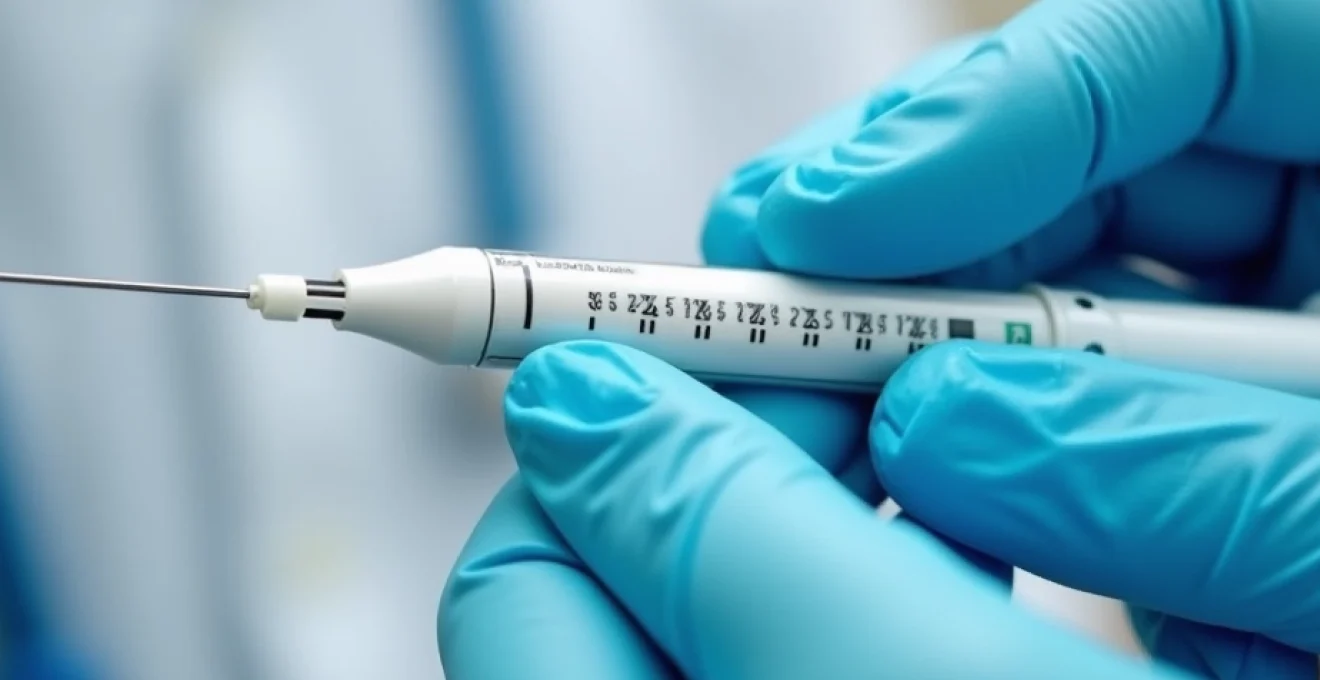
Selecting the appropriate needle size for Forteo pen injections represents a critical decision in osteoporosis treatment protocols. Healthcare professionals must consider various factors when recommending needle specifications for teriparatide administration, including patient comfort, injection accuracy, and optimal drug delivery. The Forteo pen device demonstrates remarkable compatibility with standard insulin pen needles, yet understanding the specific gauge and length requirements ensures successful treatment outcomes for patients managing osteoporosis.
The precision of subcutaneous teriparatide delivery depends heavily on proper needle selection, making this seemingly simple choice a cornerstone of effective therapy. Patient adherence to daily injections significantly improves when needle selection optimises comfort whilst maintaining therapeutic efficacy . Modern pen needle technology offers numerous options, but not all needles provide the same level of performance with the Forteo delivery system.
Forteo pen needle gauge specifications and technical requirements
The Forteo pen system accommodates a range of insulin pen needles, with specific gauge recommendations based on extensive testing and clinical evaluation. Understanding needle gauge terminology proves essential for healthcare professionals, as the gauge number inversely relates to needle diameter. Lower gauge numbers indicate larger needle diameters, whilst higher gauge numbers represent finer needles that typically provide enhanced patient comfort during injection procedures.
31-gauge needle diameter and injection precision
The 31-gauge needle represents one of the most commonly recommended options for Forteo administration, offering an optimal balance between injection comfort and medication delivery reliability. With a diameter of 0.25mm, 31-gauge needles provide sufficient flow rate for teriparatide whilst minimising injection site discomfort. Clinical testing has demonstrated that 31-gauge needles maintain dose accuracy regardless of the injection technique employed by patients.
Healthcare professionals often recommend 31-gauge needles for patients who express anxiety about injection procedures or those with sensitive skin conditions. The reduced needle diameter significantly decreases the sensation of needle penetration, potentially improving long-term treatment adherence. Patient feedback consistently indicates higher satisfaction rates with finer gauge needles during extended treatment periods .
BD Ultra-Fine needle compatibility with teriparatide delivery
Becton Dickinson (BD) needles have undergone comprehensive compatibility testing with the Forteo pen system, establishing them as the preferred needle brand for teriparatide administration. The BD Ultra-Fine needle range demonstrates consistent performance across various gauge and length specifications, ensuring reliable dose delivery for each injection. BD needles feature advanced manufacturing processes that create ultra-sharp needle tips, reducing penetration force and minimising tissue trauma.
The compatibility between BD needles and Forteo pens extends beyond simple mechanical fit, encompassing factors such as needle hub design, flow characteristics, and safety features. BD needles incorporate safety mechanisms that reduce the risk of needlestick injuries , making them particularly suitable for patients who self-administer teriparatide at home. The consistent manufacturing tolerances of BD needles ensure predictable performance across different batches and production runs.
Needle length specifications for subcutaneous administration
Needle length selection for Forteo injections requires careful consideration of patient anatomy and injection site characteristics. The available length options range from 4mm to 12.7mm, with each length serving specific patient populations and injection techniques. Shorter needles (4-6mm) prove suitable for most patients, particularly those with normal or reduced subcutaneous tissue thickness, whilst longer needles may benefit patients with increased adipose tissue at injection sites.
Research demonstrates that needle length does not affect the accuracy of teriparatide dose delivery, provided proper injection technique is maintained. This finding liberates healthcare professionals to prioritise patient comfort when selecting needle length, rather than concerning themselves with potential dose variations. The consistent dose accuracy across different needle lengths represents a significant advantage of the Forteo pen system .
Eli lilly manufacturing standards for forteo injection components
Eli Lilly maintains stringent manufacturing standards for Forteo pen compatibility, ensuring that recommended needle types meet exacting performance criteria. The company’s testing protocols evaluate needle performance across multiple parameters, including dose accuracy, injection force, and long-term reliability. These standards extend to needle compatibility assessments, ensuring that recommended needles function optimally with the Forteo delivery mechanism.
The manufacturing standards encompass both the Forteo pen device and the recommended needle specifications, creating a comprehensive system approach to teriparatide delivery. Quality control measures include batch testing of needle compatibility, dose accuracy verification, and patient safety assessments. The rigorous testing protocols ensure that patients receive consistent, accurate doses regardless of needle selection within the approved range .
Subcutaneous injection technique with forteo pen needles
Proper injection technique forms the foundation of successful teriparatide therapy, with needle selection playing a supporting role in achieving optimal outcomes. The subcutaneous injection method requires specific techniques that differ from intramuscular or intravenous administration routes. Understanding the relationship between needle characteristics and injection technique enables healthcare professionals to provide comprehensive patient education and support.
Proper needle attachment protocol for BD pen needles
The correct attachment of BD needles to the Forteo pen follows a standardised protocol that ensures secure connection and proper alignment. Begin by removing the needle from its sterile packaging, taking care not to contaminate the needle hub or tip. The needle screws onto the pen tip with a clockwise rotation, requiring firm but not excessive force to achieve proper seating. A correctly attached needle will sit flush against the pen tip without wobbling or looseness.
Before each injection, healthcare professionals should instruct patients to remove both the outer needle cap and inner needle cap, revealing the sterile needle tip ready for injection. The removal process should be performed immediately before injection to minimise contamination risk. Proper needle attachment prevents medication leakage and ensures accurate dose delivery . After use, the needle should be removed immediately and disposed of according to local sharps disposal guidelines.
Injection site rotation pattern for thigh and abdominal areas
Systematic injection site rotation prevents the development of lipodystrophy and maintains consistent drug absorption throughout the treatment period. The recommended injection areas include the thigh and abdominal regions, with each area offering multiple injection sites for rotation purposes. Patients should divide each injection area into quadrants, using different sites within each quadrant before returning to previously used locations.
The thigh injection area extends from the front and outside portions of the thigh, avoiding the inner thigh and areas close to the knee or groin. For abdominal injections, the suitable area encompasses the region around the navel, excluding a 5cm radius directly surrounding the navel itself. Consistent site rotation maintains optimal drug absorption and reduces the risk of injection site complications . Healthcare professionals should provide patients with injection site maps to facilitate proper rotation patterns.
Needle penetration depth for optimal teriparatide absorption
The depth of needle penetration significantly influences teriparatide absorption and therapeutic effectiveness. Subcutaneous injection requires the needle to penetrate beyond the epidermis and dermis into the subcutaneous tissue layer, where the medication can be absorbed into the systemic circulation. The recommended injection angle of 90 degrees ensures proper penetration depth for most needle lengths and patient anatomies.
Patients with minimal subcutaneous tissue may require modified injection techniques, such as pinching the skin or using shorter needles to avoid inadvertent intramuscular injection. Conversely, patients with substantial adipose tissue may benefit from longer needles or modified injection angles to ensure adequate subcutaneous penetration. Proper penetration depth optimises teriparatide bioavailability and therapeutic outcomes .
The accuracy of the dose remains consistent across all approved needle lengths, provided proper injection technique is maintained according to the manufacturer’s guidelines.
Single-use needle safety guidelines and disposal methods
Each Forteo injection requires a new, sterile needle to maintain injection safety and prevent contamination. Needle reuse poses significant risks, including bacterial contamination, needle tip damage, and reduced injection comfort due to dulled needle points. Healthcare professionals must emphasise the importance of single-use needle protocols to prevent injection site infections and ensure optimal injection experience.
Proper needle disposal follows established sharps safety protocols, utilising approved sharps containers that prevent needlestick injuries and environmental contamination. Patients should never recap used needles or dispose of them in regular household waste. Proper disposal protects family members, waste handlers, and environmental safety . Many pharmacies and healthcare facilities offer sharps disposal services for patients managing home injection therapy.
Alternative needle options and compatibility assessment
Whilst BD needles represent the primary recommendation for Forteo pen use, healthcare professionals may encounter situations requiring alternative needle options. The assessment of needle compatibility involves evaluating mechanical fit, dose accuracy, and patient safety considerations. Alternative needle brands must demonstrate equivalent performance characteristics to ensure therapeutic equivalence and patient safety.
The evaluation criteria for alternative needles include hub compatibility, needle gauge consistency, length accuracy, and manufacturing quality standards. Healthcare professionals should exercise caution when considering non-BD needles, as compatibility testing may not be available for all needle brands and specifications. Patient safety considerations should always take precedence over cost or availability factors when selecting alternative needle options.
Some healthcare systems may have preferred needle suppliers based on procurement contracts or formulary restrictions. In these situations, healthcare professionals should work with pharmacy teams to identify suitable alternatives that meet Forteo compatibility requirements. The needle selection process should involve verification of mechanical compatibility, dose accuracy testing when possible, and careful patient monitoring during any needle brand transitions.
Testing has confirmed that specific BD needle configurations work optimally with Forteo, including 32-gauge 4mm, 31-gauge 5mm, and 29-gauge 12.7mm options.
Troubleshooting Needle-Related issues with forteo administration
Common needle-related problems during Forteo administration include dose delivery issues, needle blockages, and injection site reactions. Healthcare professionals must equip patients with troubleshooting knowledge to address minor issues whilst recognising situations requiring professional intervention. The troubleshooting approach should emphasise safety whilst maintaining treatment continuity.
Dose delivery problems often relate to needle attachment issues, air bubbles in the medication cartridge, or needle blockages due to medication crystallisation. Patients should verify proper needle attachment before each injection and perform the prescribed priming procedure to eliminate air bubbles. If medication fails to flow through the needle, patients should replace the needle rather than attempting to force medication delivery through a potentially blocked needle.
Injection site reactions, whilst typically mild and temporary, may indicate needle-related issues such as improper injection technique or needle reuse. Persistent injection site problems warrant healthcare professional evaluation to rule out infection or allergic reactions. Early intervention for injection site complications prevents treatment interruptions and maintains patient confidence in the therapy . Documentation of injection site reactions helps healthcare professionals identify patterns and implement appropriate interventions.
Needle bending or breaking during injection represents a serious safety concern requiring immediate professional attention. Patients should never attempt to inject with damaged needles or retrieve broken needle fragments from injection sites. Emergency protocols should be established for needle-related injuries, including contact information for healthcare providers and emergency medical services when appropriate.
Storage and handling requirements for forteo pen needles
Proper storage and handling of Forteo pen needles maintains sterility and functionality throughout the shelf life of the product. Needles should remain in their original sterile packaging until immediately before use, protecting them from contamination and physical damage. Storage conditions should maintain room temperature stability whilst avoiding extreme temperatures that could affect needle materials or packaging integrity.
The storage environment should be dry and clean, avoiding areas with high humidity or chemical exposure that could compromise needle sterility or functionality. Patients should inspect needle packaging before use, discarding any needles with damaged packaging or visible contamination. Proper storage practices ensure needle reliability and maintain injection safety standards . Healthcare professionals should provide patients with storage guidelines that address home storage challenges and travel considerations.
Needle inventory management becomes important for patients on long-term Forteo therapy, requiring coordination between healthcare providers, pharmacies, and patients to ensure adequate supply without excessive stockpiling. The 28-day treatment period for each Forteo pen requires corresponding needle supplies, with additional needles available for situations requiring needle replacement due to damage or contamination. Patients should maintain a small reserve of needles to prevent treatment interruptions due to supply issues, whilst avoiding excessive inventory that could exceed expiration dates.