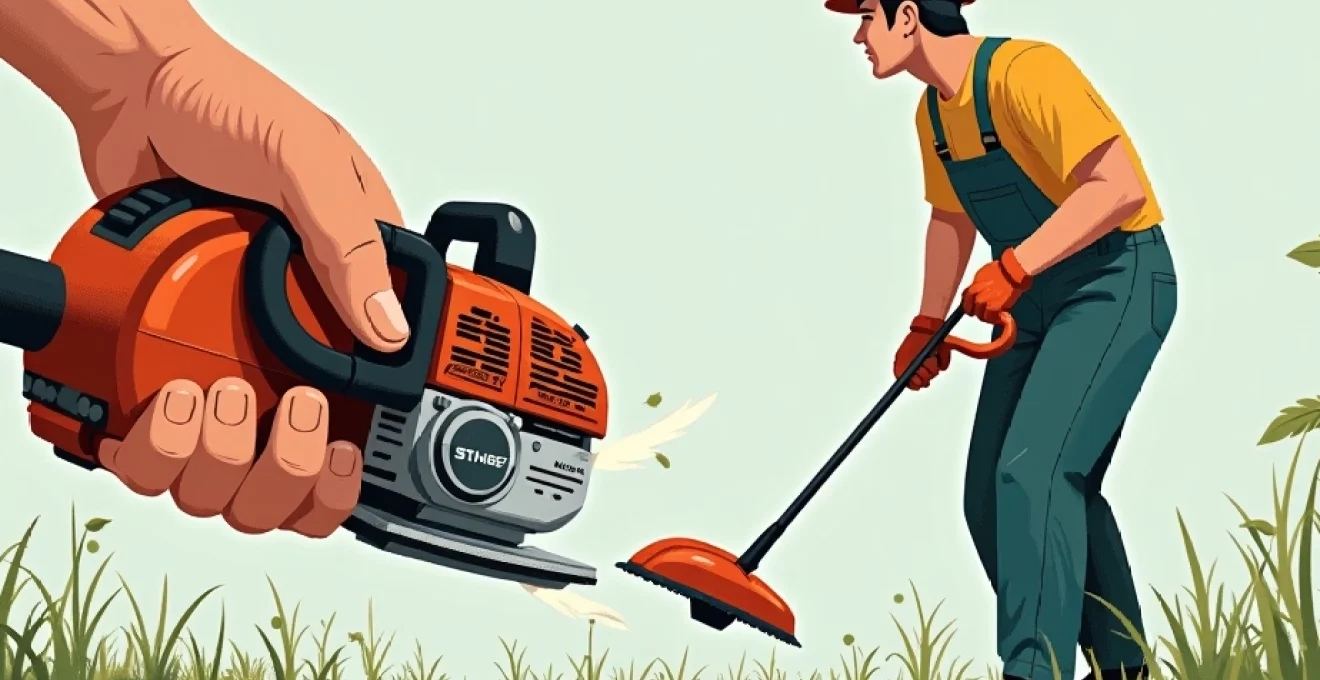
The distinctive tremor that develops in your hands after operating a string trimmer isn’t simply fatigue—it’s a physiological response to sustained vibration exposure that affects millions of gardeners and landscaping professionals worldwide. This phenomenon, experienced by anyone from weekend gardeners to commercial operators, represents the early stages of what medical professionals recognise as Hand-Arm Vibration Syndrome. Understanding the underlying mechanisms behind post-trimming hand tremors can help you make informed decisions about equipment selection, proper technique, and protective measures to safeguard your long-term hand health.
Hand-arm vibration syndrome (HAVS) from string trimmer operation
Hand-Arm Vibration Syndrome represents a progressive occupational condition that affects the vascular, neurological, and musculoskeletal systems of the upper extremities. When you operate a string trimmer, the mechanical vibrations transmitted through the handles create a cascade of physiological responses that can lead to both immediate symptoms and long-term health consequences. The syndrome develops through repeated exposure to vibrations typically ranging between 8 and 50 Hz, frequencies that coincidentally align with the operational parameters of most petrol-powered and electric string trimmers.
The condition manifests through three distinct pathways of damage, each contributing to the characteristic hand shaking experienced after trimming sessions. Vascular disruption affects blood circulation, neurological impairment damages nerve function, and musculoskeletal stress compromises joint and soft tissue integrity. Professional landscapers who use string trimmers for extended periods face the highest risk, with some studies indicating that daily exposure exceeding four hours significantly accelerates symptom development.
Raynaud’s phenomenon and vascular constriction mechanisms
The vascular component of HAVS primarily manifests as Raynaud’s phenomenon, characterised by episodic spasms of the digital arteries. These spasms cause the characteristic whitening of fingers, followed by blueness and eventual redness as circulation returns. During string trimmer operation, the sustained vibration triggers sympathetic nervous system responses that constrict peripheral blood vessels, reducing circulation to the fingertips and hands.
This vascular constriction doesn’t immediately return to normal after you cease trimming activities. The blood vessels remain in a state of heightened reactivity, contributing to the continued shakiness and reduced dexterity you experience. Cold temperatures exacerbate these symptoms, which explains why many operators notice more pronounced hand tremors when trimming during cooler weather conditions or in early morning sessions.
Neurological pathway disruption in peripheral nerve endings
The neurological effects of vibration exposure create perhaps the most concerning aspect of HAVS development. High-frequency vibrations transmitted through string trimmer handles cause microscopic damage to peripheral nerve fibres, particularly affecting sensory neurons responsible for fine motor control and proprioception. This damage accumulates over time, leading to progressive loss of tactile sensitivity and coordination.
Vibration-induced neuropathy manifests as tingling, numbness, and reduced grip strength—symptoms that persist well beyond the immediate trimming session. The median and ulnar nerves, which control thumb opposition and finger coordination respectively, show particular vulnerability to vibration damage. Research indicates that nerve conduction velocities can remain impaired for several hours following intensive string trimmer use, explaining why fine motor tasks become challenging after extended trimming sessions.
Vibration-induced white finger development timeline
Vibration-induced white finger, a subset of Raynaud’s phenomenon, follows a predictable progression timeline that varies based on exposure intensity and individual susceptibility. Initial symptoms typically appear after 6-12 months of regular vibration exposure, beginning with occasional tingling during cold weather. The condition progresses through distinct phases, with finger blanching episodes becoming more frequent and severe over subsequent months.
Professional landscapers often report their first white finger episodes occurring during winter months, when cold weather combines with vibration exposure to trigger more severe vascular responses than either factor would produce independently.
The development timeline accelerates significantly with increased daily exposure duration. Operators using string trimmers for more than four hours daily may experience symptoms within three months, while casual users might not notice significant changes for several years. Understanding this timeline helps explain why your hands continue shaking after just 30-45 minutes of trimming—even brief exposures can trigger acute vascular and neurological responses that require recovery time.
HAVS stage classification system and progressive symptoms
Medical professionals classify HAVS progression using the Stockholm Workshop Scale, which defines distinct stages based on vascular and sensorineural symptoms. Stage 0 represents no symptoms, while Stage 1 involves occasional finger blanching without functional impairment. Stage 2 brings more frequent episodes with mild functional impact, progressing to Stage 3 where severe blanching affects daily activities and work capacity.
The sensorineural component follows parallel progression, from Stage 0SN (no symptoms) through Stage 3SN (severe numbness and reduced tactile discrimination). Most recreational string trimmer users remain in early stages, experiencing temporary symptoms that resolve within hours. However, professional operators face significant risk of progression to advanced stages, where symptoms become permanent and substantially impact quality of life.
Two-stroke engine vibration frequencies and hand tremor correlation
The relationship between engine design and hand tremor development centres on the specific vibration frequencies generated by different string trimmer power systems. Two-stroke engines, commonly found in professional-grade trimmers, produce characteristic vibration patterns that directly correlate with the severity and duration of post-operation hand tremors. These engines generate vibrations across multiple frequency bands, with the most problematic frequencies falling within the 20-50 Hz range that maximally affects human hand-arm systems.
Electric string trimmers typically produce lower-amplitude vibrations compared to their petrol-powered counterparts, but they’re not entirely free from causing hand tremors. The motor characteristics, gear reduction systems, and cutting head balance all contribute to the overall vibration signature transmitted to the operator. Understanding these mechanical relationships helps explain why some trimmer models cause more severe hand shaking than others, even when used for identical durations.
Engine RPM range impact on 8-50 hz frequency transmission
String trimmer engines operate across varying RPM ranges that directly influence the frequency content of transmitted vibrations. Most two-stroke engines idle around 2,800-3,200 RPM and reach maximum speeds of 7,000-9,000 RPM during full-throttle operation. These rotational speeds translate to fundamental vibration frequencies that fall squarely within the 8-50 Hz range most harmful to human physiology.
The harmonic content of engine vibrations creates additional frequency components that compound the problem. Secondary harmonics at twice the fundamental frequency, combined with combustion-induced impulses, create a complex vibration spectrum that affects multiple physiological systems simultaneously. Research demonstrates that exposure to multiple frequency components produces more severe symptoms than single-frequency vibrations of equivalent magnitude.
Anti-vibration handle technology in STIHL and husqvarna models
Leading manufacturers have developed sophisticated anti-vibration systems specifically designed to reduce hand tremor development during extended trimming sessions. These systems typically employ spring-mounted handles that isolate the operator from engine vibrations through mechanical decoupling. The effectiveness varies significantly between manufacturers and model ranges, with professional-grade units generally offering superior vibration isolation.
Elastomeric isolation mounts represent the most common approach, utilising rubber or synthetic compounds to absorb vibrations before they reach the handles. Advanced systems incorporate tuned mass dampers that specifically target problematic frequency ranges. However, these systems require regular maintenance and replacement to maintain effectiveness, as the isolation materials degrade with exposure to fuel, oil, and environmental conditions.
Centrifugal clutch engagement and vibration amplification patterns
The centrifugal clutch mechanism found in most string trimmers creates distinctive vibration patterns that change dramatically between idle and cutting operations. At idle speeds, the clutch remains disengaged, isolating the cutting head from engine vibrations and typically reducing overall tremor-inducing forces. However, once the clutch engages during acceleration, the entire drive system becomes dynamically coupled, amplifying certain vibration frequencies.
Clutch engagement occurs progressively as engine speed increases, creating transitional vibration patterns that can be particularly problematic for hand stability. The sudden coupling of rotating masses generates impact forces that manifest as sharp vibration spikes, often more damaging than steady-state vibrations of higher magnitude. Understanding these engagement characteristics helps explain why gentle throttle control reduces hand fatigue compared to aggressive acceleration patterns.
Drive shaft imbalance effects on grip fatigue accumulation
Drive shaft imbalance represents a frequently overlooked source of excessive vibration in string trimmers, particularly as equipment ages and components wear. Even minor imbalances in the rotating assembly create centrifugal forces that multiply with the square of rotational speed, generating significant vibrations at operating RPMs. These imbalances often develop gradually through normal wear, making their effects subtle but cumulative.
Bent drive shafts, worn bearings, and damaged cutting heads all contribute to dynamic imbalance that increases grip fatigue and subsequent hand tremors. Regular maintenance and component inspection can identify these issues before they significantly impact operator comfort and health. Professional operators often report dramatic improvements in hand comfort following drive shaft replacement or professional balancing services.
Muscle fatigue mechanisms in forearm flexor and extensor groups
The persistent hand shaking following string trimmer use stems partly from muscle fatigue patterns that develop within the forearm flexor and extensor muscle groups. These muscles work in constant opposition to maintain grip strength while simultaneously absorbing and counteracting the vibrations transmitted through the trimmer handles. The sustained isometric contractions required for secure tool control create metabolic stress within the muscle fibres, leading to delayed recovery and continued tremor activity.
Forearm flexor muscles, responsible for grip strength and finger flexion, bear the primary load during trimmer operation. These muscles must generate continuous force to maintain tool control while fighting against the disruptive effects of mechanical vibration. The metabolic demands of this sustained contraction quickly deplete local energy stores and accumulate metabolic byproducts that interfere with normal muscle function. Lactate accumulation and phosphocreatine depletion within these muscle groups contribute significantly to the post-operation tremor phenomenon.
Extensor muscles, though less obviously involved in grip maintenance, play crucial roles in wrist stability and vibration dampening. These muscles work overtime to maintain proper wrist alignment against the rotational forces generated by the cutting head. The resulting muscle imbalances between flexor and extensor groups create coordination deficits that manifest as hand tremors during recovery periods. This explains why the shaking becomes most apparent when attempting fine motor tasks like holding a phone, rather than during complete rest.
The neuromuscular fatigue extends beyond simple muscle tiredness to encompass changes in motor unit recruitment patterns and firing frequencies. Vibration exposure alters the normal synchronisation between motor neurons, creating irregular muscle activation patterns that persist after the vibration source is removed. These disrupted firing patterns contribute to the characteristic tremor frequency observed in post-trimming hand shake, typically ranging between 4-8 Hz.
Ergonomic risk factors during extended brush cutting sessions
Extended brush cutting sessions expose operators to multiple ergonomic stressors that compound the effects of vibration exposure and significantly increase the likelihood of developing hand tremors. The combination of awkward postures, sustained grip forces, and repetitive motions creates a perfect storm of risk factors that affect not only immediate comfort but also long-term musculoskeletal health. Professional landscapers who engage in all-day cutting sessions face particularly high risks, as the cumulative effects of these stressors multiply with exposure duration.
The weight distribution of string trimmers forces operators into compensatory postures that place additional stress on the upper extremity musculature. Most trimmers exhibit forward weight bias due to engine placement, requiring continuous correction forces through the arms and shoulders. This constant postural adjustment work increases overall muscle fatigue and reduces the operator’s ability to cope with simultaneous vibration exposure.
Grip force requirements and sustained muscle contraction analysis
String trimmer operation demands sustained grip forces typically ranging from 15-25% of maximum voluntary contraction, levels that quickly lead to muscle fatigue when maintained continuously. The grip force requirements increase substantially during cutting operations due to reactive forces from the cutting head and the need to maintain precise control. Studies indicate that operators unconsciously increase grip strength by 30-40% above necessary levels when exposed to vibration, further accelerating muscle fatigue.
The sustained nature of these contractions prevents normal muscle recovery cycles that would occur during intermittent work. Unlike dynamic activities that allow brief moments of muscle relaxation, string trimmer operation requires continuous activation of grip muscles throughout the work session. This sustained contraction pattern impedes local blood circulation, reducing oxygen delivery and waste product removal from working muscles.
Shoulder abduction angles and postural strain patterns
Shoulder abduction angles during trimmer operation significantly influence the development of hand tremors through their impact on upper extremity muscle activation patterns. Most trimming tasks require shoulder abduction angles between 30-60 degrees, positions that place the deltoid and rotator cuff muscles at mechanical disadvantage. These elevated arm positions increase the static loading on shoulder stabilising muscles, creating fatigue that propagates down the kinetic chain to affect hand control.
Maintaining arms in elevated positions for extended periods creates a phenomenon known as “static loading syndrome,” where muscles must work continuously against gravity while simultaneously performing their primary functional tasks.
The postural strain patterns develop progressively throughout trimming sessions, with compensatory movements becoming more pronounced as muscle fatigue accumulates. Operators typically exhibit increased shoulder elevation and forward head posture as they attempt to reduce the loading on fatigued muscles. These compensatory patterns alter the biomechanical efficiency of the entire upper extremity, contributing to increased vibration transmission and reduced hand stability.
Repetitive wrist flexion impact on carpal tunnel pressure
The repetitive wrist flexion required for precise trimmer control places significant stress on the carpal tunnel structures, potentially increasing the risk of median nerve compression. String trimmer operation typically involves frequent wrist movements between neutral and 20-30 degrees of flexion, positions that can elevate carpal tunnel pressure above normal physiological levels. This pressure elevation becomes particularly problematic when combined with the grip forces required for tool control.
Vibration exposure compounds carpal tunnel pressure issues by causing localised swelling within the confined space of the carpal tunnel. The combination of mechanical pressure from wrist positioning and physiological swelling from vibration exposure creates a double insult to the median nerve. This explains why many operators experience numbness and tingling in the thumb and first two fingers following extended trimming sessions, symptoms characteristic of median nerve compression.
Medical prevention strategies for professional landscapers
Professional landscapers face unique challenges in managing vibration exposure due to the cumulative nature of their work and the economic pressures to maintain productivity. Medical prevention strategies must address both immediate symptom management and long-term health preservation while remaining practical within the constraints of commercial landscaping operations. The most effective approaches combine equipment modifications, work practice changes, and individual health monitoring to create comprehensive protection programs.
Early intervention represents the cornerstone of effective HAVS prevention, as the condition’s progressive nature makes reversal increasingly difficult once advanced stages develop. Professional landscapers should implement regular health screening protocols that can detect early symptoms before they become debilitating. Simple assessments such as cold provocation tests, vibrotactile threshold measurements, and grip strength monitoring can identify developing problems while intervention remains effective.
Work rotation strategies offer significant benefits for large landscaping crews, allowing individual operators to limit their daily vibration exposure while maintaining overall productivity. Implementing job rotation systems requires careful planning and cross-training, but the long-term benefits in reduced workers’ compensation claims and improved job satisfaction typically justify the initial investment. Exposure time limits based on current research recommendations suggest maximum daily exposure durations of 2-4 hours depending on vibration magnitude and individual risk factors.
Personal protective equipment specifically designed for vibration exposure provides another layer of protection, though the effectiveness varies significantly between product types and application methods. Anti-vibration gloves can reduce transmitted vibration by 10-40% when properly selected and maintained, but incorrect selection may actually increase exposure in certain frequency ranges. Regular training on proper PPE selection, use, and maintenance ensures maximum protective benefits.
- Implement mandatory rest periods every 30-45 minutes during intensive trimming operations
- Rotate workers between high-vibration and low-vibration tasks throughout the workday
- Conduct regular equipment maintenance to minimise vibration transmission
- Provide comprehensive training on proper grip techniques and postural awareness
Equipment modifications and vibration dampening solutions
Equipment modifications represent the most direct approach to reducing vibration-related hand tremors, offering solutions that address the problem at its source rather than relying solely on operator adaptation. Modern string trimmer manufacturers have developed increasingly sophisticated dampening systems, though the effectiveness varies dramatically between budget and professional-grade equipment. The most successful modifications target the specific frequency ranges that cause the greatest physiological impact, typically focusing on the 20-50 Hz range where hand-arm vibration syndrome develops most readily.
Aftermarket vibration reduction systems provide options for operators seeking to upgrade existing equipment without complete replacement. These systems range from simple handle wraps and grip modifications to complex isolation mounting systems that require professional installation. The cost-benefit analysis of equipment modifications versus replacement depends heavily on the age and condition of existing equipment, daily usage patterns, and the severity of symptoms experienced by operators.
Passive vibration dampening represents the most common and cost-effective approach to equipment modification. Elastomeric handle covers utilise specially formulated rubber compounds designed to absorb vibrations before they reach the operator’s hands. These covers work most effectively when properly sized and regularly replaced, as the dampening materials degrade with exposure to fuel, oil, and environmental conditions. Professional-grade covers can reduce transmitted vibration by 15-30% across critical frequency ranges.
Active vibration control systems, while more expensive, offer superior performance through electronic or mechanical cancellation of problematic vibrations. These systems typically incorporate accelerometers that detect vibration patterns and generate counter-vibrations to neutralise the harmful frequencies. Though primarily found in high-end professional equipment, aftermarket active systems are becoming increasingly available for retrofit applications.
Handle design modifications focus on optimising grip ergonomics to reduce the force required for secure tool control while improving vibration isolation. Larger diameter handles distribute grip forces over greater surface areas, reducing localised pressure points that contribute to nerve compression. Contoured grips that match natural hand positions allow operators to maintain control with reduced grip strength, decreasing overall muscle fatigue and subsequent tremor development.
Weight distribution adjustments can significantly impact vibration transmission by altering the dynamic characteristics of the entire tool system. Adding strategically placed masses or counterweights changes the natural frequency of the trimmer, potentially moving problematic resonances away from harmful frequency ranges. However, these modifications require careful engineering to avoid creating new vibration problems or negatively impacting tool balance and manoeuvrability.
Professional landscapers often report that simple modifications like adding foam grip tape and ensuring proper handle tightness can reduce hand tremor intensity by 20-40% without any significant equipment investment.
Drive system modifications address vibration generation at its source by improving the balance and alignment of rotating components. Regular maintenance procedures such as drive shaft balancing, clutch adjustment, and bearing replacement can dramatically reduce vibration levels in aging equipment. These modifications often prove more cost-effective than complete equipment replacement while providing substantial improvements in operator comfort.
Cutting head design plays a crucial role in overall vibration characteristics, with different head styles generating varying levels of reactive forces during operation. Fixed-line heads typically produce more consistent vibration patterns compared to bump-feed systems that create intermittent impact forces. Upgrading to professionally balanced cutting heads with optimised aerodynamics can reduce both vibration levels and fuel consumption while improving cutting performance.
Maintenance protocols specifically focused on vibration reduction ensure that equipment modifications remain effective throughout the tool’s service life. Regular inspection of isolation mounts, handle components, and drive system elements prevents the gradual degradation that often negates the benefits of anti-vibration systems. Establishing maintenance schedules based on operating hours rather than calendar time ensures that high-use equipment receives appropriate attention to maintain optimal vibration characteristics.
The integration of multiple modification approaches typically yields superior results compared to single-solution implementations. Combining improved handle ergonomics with drive system balancing and regular maintenance creates synergistic effects that can reduce transmitted vibration by 50-70% in well-executed modifications. This comprehensive approach addresses vibration generation, transmission, and operator interface simultaneously, providing maximum protection against hand tremor development while maintaining operational efficiency and productivity.